SaaS Development for Businesses
Professional SaaS development enables scalable cloud platforms delivered as Software-as-a-Service. From product strategy and multi-tenant architecture to subscription models, Wentytech builds powerful SaaS solutions with clean API integration and long-term scalability.
What is SaaS development?
SaaS development refers to the design and implementation of software solutions operated centrally in the cloud and delivered via the internet as a service. Users access functionality through browsers or APIs without local installation.
Unlike traditional on-premise systems, modern SaaS development is based on cloud-native architecture, multi-tenancy, scalable infrastructure, and structured access control.
For businesses, SaaS development enables recurring revenue models, global scalability, and digital product innovation.
Common challenges in SaaS projects
Building a SaaS platform is more complex than traditional software development because architecture, operations, security, and the product model must work together from day one.
Architectural Missteps
An unclear tenancy model (single vs. multi-tenant) or missing scalability strategy often leads to hard technical limits later. Fixing it becomes expensive because the data model, authentication, billing, and deployments are already built on those decisions.
Security & Privacy Requirements
Cloud solutions must meet strict standards for data protection, access control, and compliance. This includes robust identity and role models, encryption, audit trails, and traceable data flows and retention policies.
Missing Product Strategy
Without a clear target audience, pricing logic, and feature prioritization, the SaaS model remains commercially fuzzy. The result is often feature sprawl, slow time-to-value, and weak differentiation in the market.
Scaling Challenges
Growing user numbers can trigger performance and infrastructure issues if observability, capacity planning, and load testing are missing. Cloud costs also rise quickly if efficiency (caching, query patterns, background jobs) isn’t designed early.
Operations & Release Management
SaaS requires continuous updates with minimal downtime and reliable rollback strategies. Without CI/CD, automated tests, and stable deployment processes, every change becomes risky and slows delivery.
Billing & Subscription Logic
Plans, upgrades/downgrades, trials, invoicing, and usage-based billing add significant technical and business complexity. If metering and entitlements aren’t clearly defined, revenue leakage and support overhead increase.
Onboarding & Self-Service
SaaS must get users to value quickly—ideally without manual intervention. Missing self-service flows (signup, tenant provisioning, roles, data import) increases churn risk and creates ongoing load for support and operations teams.
Multi-tenant architecture
We build SaaS platforms with clear tenant separation, secure data isolation, and centralised management, enabling multiple customers to operate safely on shared infrastructure.
Cloud-native scalability
Our SaaS solutions are built on scalable cloud infrastructure, ensuring performance, availability, and extensibility as user numbers grow.
API-first integration
Platforms are designed API-first, enabling structured integration with ERP, CRM, and automation systems.
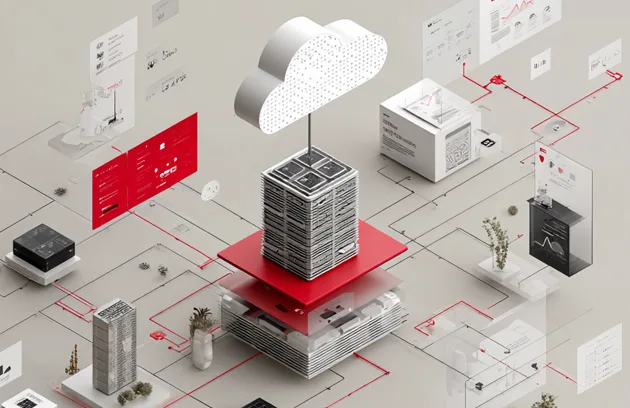
Digital products with recurring revenue models
SaaS development enables scalable platform products with recurring revenue. Features evolve iteratively, user groups expand, and markets grow – built on stable and sustainable architecture.
SaaS development: typical use cases
B2B SaaS Platforms
Digital platforms for business customers with role-based access control, clear multi-tenant structures, and subscription-based models. Typical features include self-service onboarding, granular permission concepts, and ERP/CRM integrations to enable end-to-end digital workflows.
Internal SaaS Solutions
Cloud-based software used across multiple locations, subsidiaries, or business units. Centralized administration, consistent data models, and standardized workflows ensure transparency, scalability, and reduced IT complexity.
Product Digitalization
Transforming existing software products or on-premise solutions into scalable SaaS offerings. This includes multi-tenancy, automated deployments, subscription logic, and cloud-native architectures for continuous delivery.
API & Platform Ecosystems
SaaS platforms with open, well-documented interfaces to integrate external services and partner solutions. Through REST/GraphQL APIs, webhooks, or event-driven architectures, extensible ecosystems are created that support rapid innovation.
Subscription & Billing Models
Implementation of subscription logic, usage-based billing (metering), and automated invoicing workflows. Includes plan management, upgrades/downgrades, trial handling, and transparent reporting and revenue tracking.
Multi-Tenant Architectures
SaaS solutions with logically separated tenants, shared code bases, and efficient resource utilization. Strong data isolation, security controls, and performance optimization are critical for scalable and cost-efficient growth.
Self-Service & Customer Portals
Portals that allow customers to manage accounts, users, configurations, and reports independently. Automated provisioning and clear UX reduce support effort and accelerate time-to-value.
Analytics & Usage Tracking
Built-in analytics for usage, performance, and feature adoption to guide product decisions. Real-time dashboards, event tracking, and KPI monitoring enable data-driven product evolution and pricing optimization.
Strategic SaaS development with technical depth
Wentytech combines product strategy with technical excellence. Our SaaS platforms are built on clean architectural principles and designed for long-term operation.
As a Swiss technology partner, we prioritise security, compliance, and scalable cloud infrastructure from day one.
FAQ - SaaS
What differentiates SaaS from traditional software?
SaaS (Software as a Service) is centrally hosted in the cloud and delivered over the internet without local installation. Updates, maintenance, security patches, and infrastructure management are handled centrally. This eliminates installation overhead and version conflicts while enabling continuous feature delivery.
Is multi-tenancy secure?
Yes. In a properly designed multi-tenant architecture, customer data is logically isolated and protected through role-based access control. Additional safeguards such as encryption, tenant isolation mechanisms, monitoring, and audit logs ensure data integrity and confidentiality.
Can a SaaS product scale?
Yes. Cloud infrastructure supports both horizontal scaling (adding instances) and vertical scaling (increasing resources per instance). Load balancing, containerization, and automated deployments allow the system to adapt dynamically to growing user numbers or data volumes.
Are custom features possible?
Yes. SaaS platforms can be built modularly, allowing controlled implementation of additional features, integrations, or client-specific extensions. Feature toggles and configurable modules enable differentiation without compromising system stability.
Is SaaS development suitable for SMEs?
Yes. SaaS models provide predictable cost structures, flexible scaling, and low entry barriers for SMEs. Subscription-based pricing aligns investment with actual usage, while updates and operations are centrally managed.
Ready to build your own SaaS product?
We assess product strategy, tenancy model, and scalability requirements—and design a robust SaaS architecture with subscription logic and API integration.
Discuss Your SaaS ProjectCloud-native · Multi-tenant · Scalable · Future-proof