API Development & Integration for Businesses
API-driven applications enable structured communication between systems, platforms, and digital services. Using an API-first architecture, we develop applications that can be flexibly integrated, extended, and scaled. Wentytech designs robust interface solutions and full applications connecting ERP, CRM, and automation systems reliably.
What are API-driven applications?
API-driven applications are software solutions built around clearly defined interfaces (Application Programming Interfaces). APIs allow different systems to exchange structured data and expose functionality in a controlled manner.
Unlike monolithic systems, an API-first architecture is modular. Frontend, backend, and external services remain decoupled, improving scalability, maintainability, and extensibility.
For businesses, API-driven applications form the backbone of integrated system landscapes and digital ecosystems.
Common challenges without a structured API architecture
Many companies operate with historically grown system landscapes that are only partially integrated.
Manual data synchronization
Data must be maintained multiple times or transferred manually. This increases the risk of errors, slows down processes, and results in inconsistent data across systems.
Unstable interfaces
Missing documentation or unclear interface logic leads to errors and integration issues. Changes in one system can have unpredictable effects on connected applications.
Monolithic systems
New features or integrations are difficult to implement. Rigid architectures prevent agile evolution and increase long-term technical debt.
Scalability challenges
Growing system landscapes become increasingly complex and difficult to manage. Without a clear API strategy, performance bottlenecks and maintenance effort grow disproportionately.
Lack of API governance
There are no consistent standards for authentication, versioning, or monitoring. This limits security, maintainability, and controlled evolution of the architecture.
Security and access risks
Interfaces are not properly secured or rely on outdated authentication mechanisms. This increases the risk of data breaches and unauthorized access.
Low reusability
Functions are not exposed as clearly defined services. As a result, integrations are built individually instead of being reused in a standardized way, increasing cost and complexity.
API-first architecture
We build applications API-first, defining clear data structures and interfaces that allow flexible extension and integration across systems.
REST & interface development
From REST APIs to custom interfaces, we deliver secure, well-documented APIs for enterprise integration.
System integration & orchestration
ERP, CRM, and automation systems are connected and orchestrated via APIs to create seamless end-to-end processes.
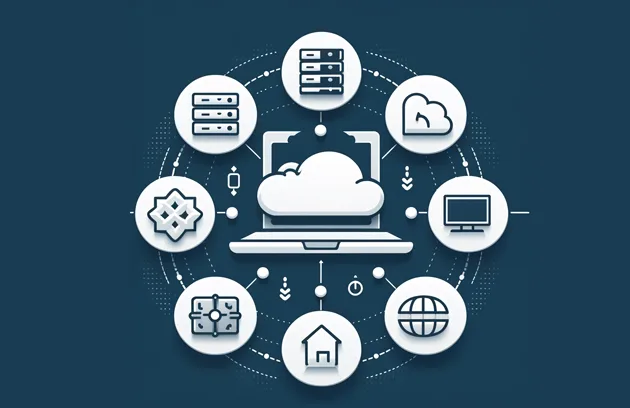
Connected systems instead of isolated applications
API-driven applications connect your system landscape in a structured and sustainable way. Data flows are automated, processes integrated end-to-end, and new digital services implemented faster.
API-driven applications: typical use cases
ERP & CRM integration
Connecting core systems to synchronize customer, product, and order data. In addition, we define data models, validations, and conflict-resolution rules so information stays consistent and auditable.
Automated process chains
APIs orchestrate end-to-end workflows across multiple systems. Events, webhooks, and queue-based processing keep flows resilient even under load spikes or partial outages.
Platform and partner integration
External partners or platforms are connected via well-defined APIs. Access control, rate limiting, and versioning ensure integrations remain stable and secure in production.
Microservices architectures
Modular services communicate via APIs and scale independently. Clear boundaries, observability (logs/metrics/tracing), and CI/CD enable fast releases without risking the entire system.
API monetization
Exposing your own APIs as a digital product or service. This typically includes a developer portal, documentation, API keys, billing/quota models, and SLA-grade operations.
Data and event streaming
APIs deliver data not only synchronously but also as streams or events for near-real-time use cases. This enables BI, monitoring, and automation to react quickly without periodic batch jobs.
Identity and access integration (SSO)
Integration with identity providers (e.g., Azure AD/Entra ID, Keycloak) for single sign-on and centralized access control. This enforces roles, token lifecycles, and compliance requirements consistently.
API modernization (legacy wrapping)
Existing legacy systems are exposed through modern API layers without rebuilding everything at once. This reduces risk and supports an incremental migration while keeping business running.
Structured integration with technical depth
Wentytech builds API-driven applications with a focus on stability, security, and clear documentation. Interfaces are versioned and designed for long-term maintainability.
As a Swiss technology partner, we prioritise clean architecture and secure integration.
FAQ
What does API-first mean?
Systems are designed from the start around clearly defined interfaces. This decouples frontends, services, and integrations so each part can evolve independently.
Are APIs secure?
Yes. Authentication, authorization, and encryption are built-in. We also apply proven practices like OAuth2/OIDC, rate limiting, logging/monitoring, and security testing.
Can existing systems be connected?
Yes, including legacy systems. Depending on the environment we use REST/SOAP, database connectors, middleware, message queues, or wrapper APIs to modernize incrementally.
Are APIs scalable?
Yes. APIs can scale horizontally. With stateless services, caching, queues, and solid monitoring, performance remains stable as load increases.
Is API development suitable for SMEs?
Yes, especially in growing system landscapes. SMEs benefit from less manual data handling, more reliable integrations, and an architecture that makes future tools and automation easier to add.
Ready for integrated system landscapes?
In an initial, non-binding conversation, we analyse your IT landscape and outline how API-driven applications can enhance efficiency and scalability.
Schedule a free consultationFree · 30 min · API-first · Scalable